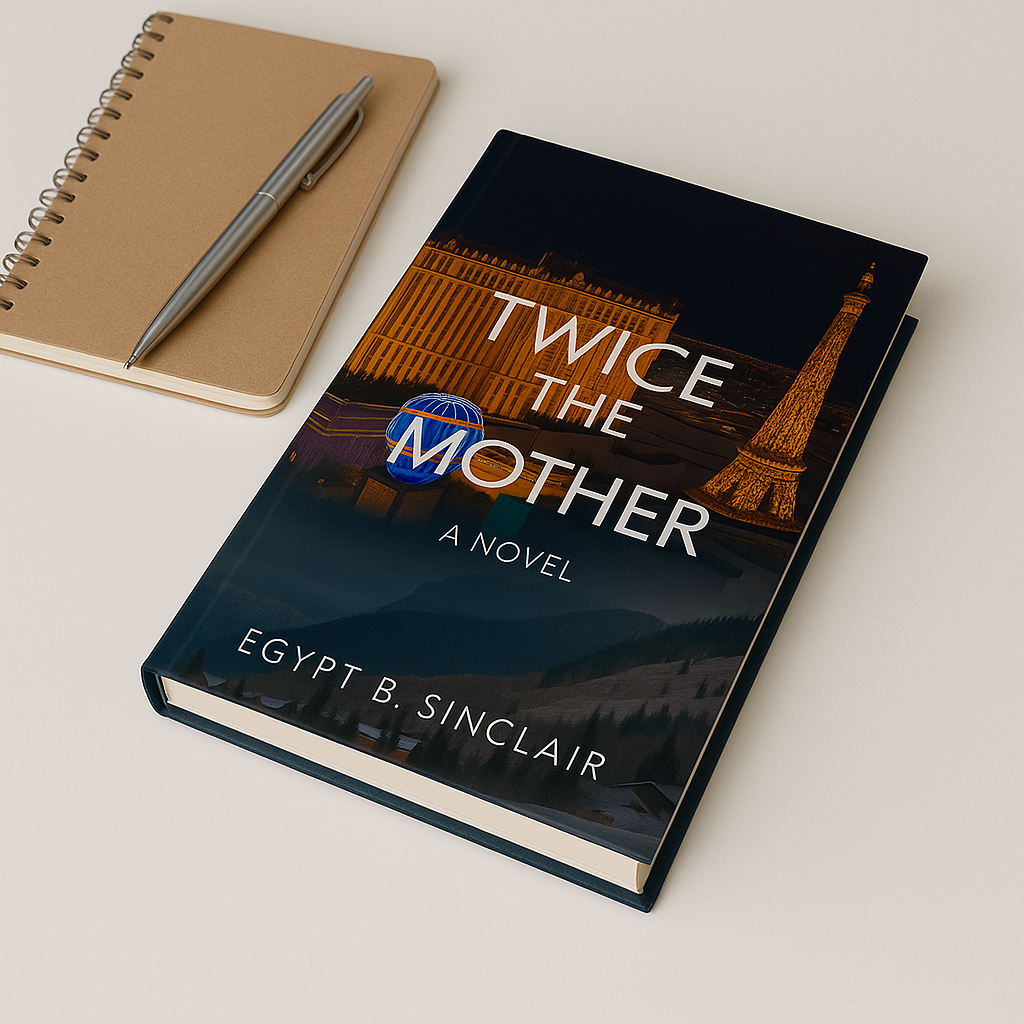
There’s a kind of silence that follows a money conversation.
You start doing math in your head before the other person even finishes their sentence.
You tell yourself it’s fine, that everyone’s stretched sometimes, that you’ll make it work.
But money has a way of changing the temperature in a room.
It doesn’t just touch your wallet — it gets under your skin.
It decides what you say yes to, what you forgive, and what you hide.
Savannah told herself it was just business.
A transaction between grown adults.
A way to breathe again.
But the thing about money? It never stays where you put it.
It seeps into your choices, your marriage, your body, your sense of self.
In Twice the Mother, betrayal doesn’t start in a bedroom.
It starts at a kitchen table — with a woman doing the math on her survival, and realizing that love can’t always cover the bills.
The Cost Beneath the Choice
If you’ve ever had to stretch one paycheck across too many promises, you already know this story.
It’s the one where you tell yourself, just this month, and then another month comes.
You make the “smart” decision — the one that keeps the lights on — but somewhere in that calculation, a little piece of you goes quiet.
The truth is, money rewires us long before we notice.
That’s not weakness — that’s neuroscience.
Researchers at the University of California, Berkeley, found that money changes how we see the world. It can make empathy feel like a luxury, and morality start to sound like opinion. When people have more, they tend to justify more — believing their decisions are simply “practical.”
And for those of us who don’t have enough? Survival starts to wear the mask of consent.
The Journal of Behavioral and Experimental Economics found that when a financial reward is on the line, honesty begins to bend. The brain reframes the lie as protection — not deceit. Because when the stakes are rent, groceries, or a child’s medication, morality doesn’t disappear — it just gets priced differently.
So when you find yourself saying, I had no choice, you’re not lying.
You’re describing what happens when options run out but the bills don’t.
That’s the part of Savannah’s story that stings most — not because it’s foreign, but because it’s familiar.
Every woman who’s ever smiled through the weight of a decision she couldn’t afford to regret knows this feeling.
The good woman. The careful one. The one who keeps it all together while quietly negotiating her own worth.
Money doesn’t need to corrupt you to control you.
It just needs to convince you that the cost makes sense.
And when it does, that’s when the real danger begins — not in greed, but in the gentle voice that says:
You’re doing what you have to do.
The Currency of Silence
We’re taught to be quiet long before we ever learn to speak.
“Be a good girl.”
“Don’t make a scene.”
“Smile.”
“Say thank you.”
Those words sound innocent, but they train us early — teach us that peace is something you keep, not something you question.
So by the time we grow up, that silence is second nature.
We carry it into our jobs, our friendships, our marriages. We swallow the discomfort, smooth the edges, and call it maturity. We tell ourselves we’re being wise, composed, strong.
And when life begins to tighten — when the bills pile up, when the love starts to fade, when the choices stop feeling like choices — that same silence becomes armor.
It protects us.
It also imprisons us.
Research from the National Institutes of Health shows that families under financial strain communicate less — not because they’ve stopped caring, but because they’re too tired to risk the truth. Psychologists call it moral fatigue: the slow exhaustion that comes from holding the world together while pretending it’s not falling apart.
Savannah’s story in Twice the Mother lives inside that exhaustion. Her quiet isn’t weakness. It’s survival.
Every unspoken word is a strategy. Every pause is a calculation.
And maybe you know that rhythm — the measured breathing between what you want to say and what you can afford to.
Because we were all taught that silence keeps the peace.
No one mentioned it also keeps the pain.
We don’t just stay silent because we’re scared.
We stay silent because the world has taught us that speaking up costs more than staying small.
That NIH study we talked about — the one that followed families under constant financial stress — found something most of us already know in our bones: when money is tight, people talk less. Not because they stop loving each other, but because every word feels dangerous. One honest sentence can start a fight, or a spiral, or an ending.
So you choose peace — or at least the version of peace that keeps the lights on.
You say it’s fine when it isn’t. You go to bed with the numbers still spinning in your head, promising yourself you’ll figure it out tomorrow.
That’s what psychologists call moral fatigue.
It’s not just being tired. It’s the exhaustion that comes from doing what’s necessary when what’s necessary keeps breaking your spirit.
And over time, that fatigue starts to feel normal.
You learn to confuse silence with stability.
In Twice the Mother, Savannah’s quiet is the kind every woman understands — the kind that hums between doing what’s right and doing what’s possible. She’s not the first woman to bury her truth under responsibility, and she won’t be the last.
Because when money rules the room, truth becomes a luxury — one most of us were never taught to afford.
When Money Writes the Rules
Here’s the thing no one tells us:
Money has always been writing the rules.
From what kind of woman gets called “responsible” to which mother gets called “selfish.”
From whose dreams are labeled “ambitious” to whose needs are labeled “too much.”
And because we were raised to behave, to keep things together, to be the dependable ones — we rarely stop to question who benefits from that silence.
That global research we mentioned shows that financial stress shapes identity, especially for women who carry the emotional and physical labor of home and work. More than half of women report ongoing financial anxiety, most of it tied to caregiving and the cost of survival. The pattern is clear: when the world expects you to nurture everyone, it rarely leaves room to nurture yourself.
But here’s what I want us — the women reading this — to remember:
Silence may keep the peace, but it doesn’t build freedom.
You can start small.
Not with grand declarations, but with tiny acts of honesty.
1. Name the cost.
When something feels heavy, say it out loud — even if it’s only to yourself. What is this decision really costing me? Time? Health? Joy? Truth? Naming it breaks the spell.
2. Redefine responsibility.
Being the strong one doesn’t mean carrying it all. It means choosing what actually matters and letting the rest fall without guilt.
3. Ask for help before it’s an emergency.
That’s not weakness. That’s wisdom. The systems we live in were never designed for women to survive them alone.
4. Stop calling survival selfish.
You are allowed to want stability, rest, softness — things that don’t require your constant sacrifice.
Savannah’s story in Twice the Mother is a mirror, not a warning. It’s what happens when silence becomes the only language we know.
But it’s also a reminder: rules written by money can be rewritten — one boundary, one conversation, one truth at a time.
So if any part of this feels too close to home, maybe that’s the point.
Maybe it’s time to stop being the “good girl” and start being the honest one.
Because love deserves more than what’s left after the bills are paid.
Order Your Copy Of Twice The Mother Now.