General

He Had a Family Too — But When a Woman Does It, She’s a Monster?

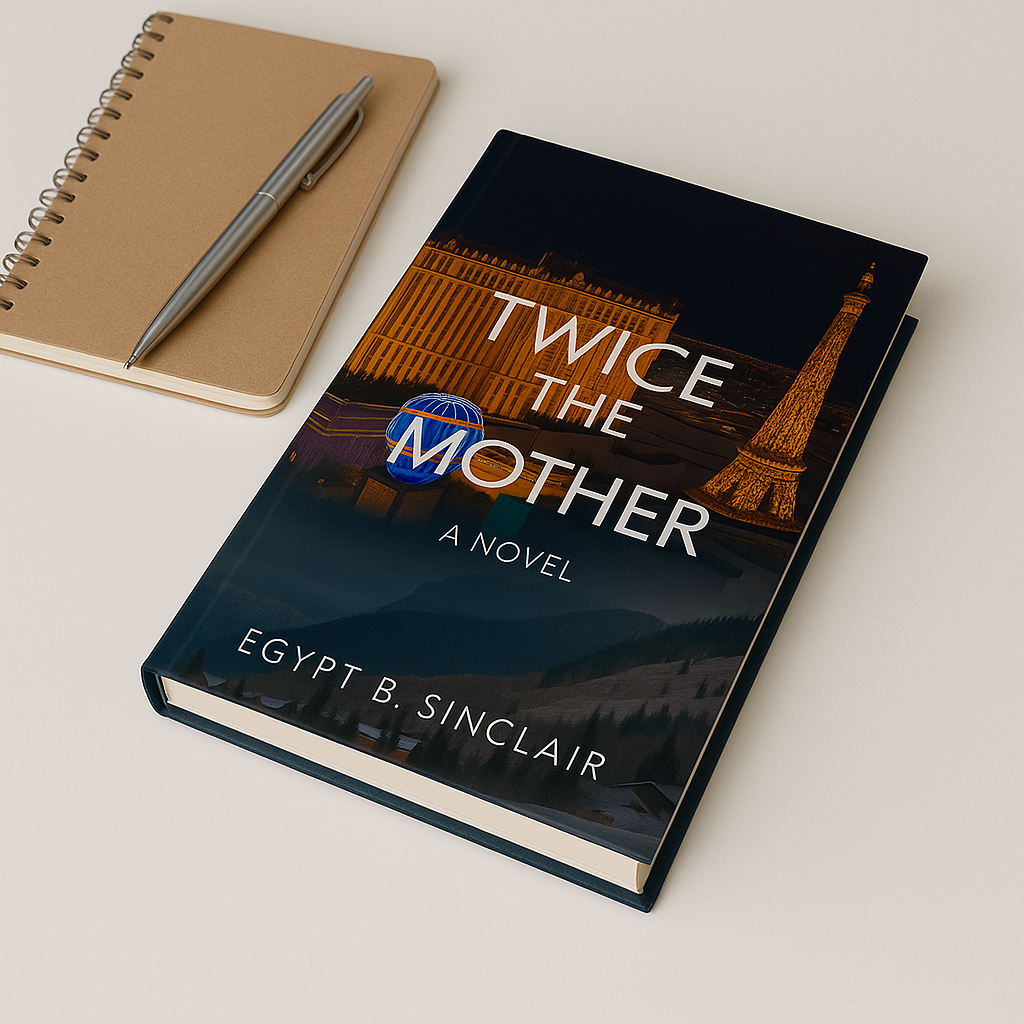
You’ve heard the story before.A man leaves, starts over, builds a new life — and people say, he just needed to find himself. He gets a second chance. A new family. A redemption arc. But when a woman does the same thing?When she leaves to survive, or to breathe, or to remember who she was before everyone else’s needs took over — they don’t call it reinvention.They call it betrayal. They say she ruined her home.They say she should have tried harder.They never ask what it cost her to stay. From pulpits to talk shows to our own group chats, the rule hasn’t changed much: men are allowed to start over. Women are expected to endure. In Twice the Mother, Savannah breaks that unspoken rule — not out of lust, not out of recklessness, but out of necessity.And like every woman who’s dared to choose herself, she’s the one left carrying the shame. The History of Forgiven Men Think about it.We’ve all watched powerful men rebuild their reputations after the kind of mistakes that would end a woman’s life as she knows it. A man cheats, leaves, remarries — the headline says he’s found love again. A woman does the same, and suddenly she’s a warning label. The cultural math has never been equal.When a man walks away, it’s framed as courage. When a woman walks away, it’s framed as cruelty. And here’s the quiet damage that does: it teaches women to believe that their endurance is proof of worth. That pain handled gracefully earns respect. That suffering well is a form of holiness. But what if it’s just social conditioning in prettier clothes? That’s how we get trapped — forgiving men who “needed time to grow,” while punishing ourselves for needing rest.Applauding their second chances while hiding our own survival behind closed doors. Savannah’s story forces us to look at that imbalance up close.Her choices mirror the ones many women have imagined but never acted on.She steps outside the lines, and suddenly, the same society that excuses men for abandoning children demands that she carry every consequence alone. And that’s the part that should make us pause — not her mistake, but our reaction to it. Because maybe the real question isn’t why she did it.Maybe it’s why we expect her not to. The Myth of the “Good Mother” We’ve been told the same story for generations.A good mother gives everything.Her time. Her body. Her dreams.Her sanity, if that’s what it takes. We’re told that love means self-erasure — that being needed is the highest compliment a woman can earn.And yet, every study on modern motherhood says the same thing: the standard is impossible. Research studies have found that motherhood carries a moral expectation far stronger than fatherhood — women are seen as responsible for the emotional temperature of the home, while men are praised for showing up at all.Another long-term review from the NIH showed how those expectations don’t fade with progress. Instead, they evolve — women are now expected to be both career-driven and ever-present mothers. The “ideal” has expanded, not eased. And here’s the quiet truth: when you’re told to give everything, there’s nothing left to build with.You can’t raise children in a world that keeps asking you to disappear. That’s why Savannah’s story matters. We don’t often say this out loud, but the cultural script of the good mother is the most effective form of control there is.It keeps women overworked and under-acknowledged.It keeps silence dressed up as virtue.And it convinces us that the smallest act of self-preservation is selfishness. But it’s not selfish to want to be whole.It’s not betrayal to want a life beyond service.It’s not failure to choose yourself before there’s nothing left to give. Because maybe being a good mother starts with being a good woman — to yourself.

He Had a Family Too — But When a Woman Does It, She’s a Monster? Read More »

The Power of Money: Does the Dollar Decide Your Destiny?

There’s a kind of silence that follows a money conversation. You start doing math in your head before the other person even finishes their sentence.You tell yourself it’s fine, that everyone’s stretched sometimes, that you’ll make it work. But money has a way of changing the temperature in a room.It doesn’t just touch your wallet — it gets under your skin.It decides what you say yes to, what you forgive, and what you hide. Savannah told herself it was just business.A transaction between grown adults.A way to breathe again. But the thing about money? It never stays where you put it.It seeps into your choices, your marriage, your body, your sense of self. In Twice the Mother, betrayal doesn’t start in a bedroom.It starts at a kitchen table — with a woman doing the math on her survival, and realizing that love can’t always cover the bills. The Cost Beneath the Choice If you’ve ever had to stretch one paycheck across too many promises, you already know this story.It’s the one where you tell yourself, just this month, and then another month comes.You make the “smart” decision — the one that keeps the lights on — but somewhere in that calculation, a little piece of you goes quiet. The truth is, money rewires us long before we notice.That’s not weakness — that’s neuroscience.Researchers at the University of California, Berkeley, found that money changes how we see the world. It can make empathy feel like a luxury, and morality start to sound like opinion. When people have more, they tend to justify more — believing their decisions are simply “practical.” And for those of us who don’t have enough? Survival starts to wear the mask of consent.The Journal of Behavioral and Experimental Economics found that when a financial reward is on the line, honesty begins to bend. The brain reframes the lie as protection — not deceit. Because when the stakes are rent, groceries, or a child’s medication, morality doesn’t disappear — it just gets priced differently. So when you find yourself saying, I had no choice, you’re not lying.You’re describing what happens when options run out but the bills don’t. That’s the part of Savannah’s story that stings most — not because it’s foreign, but because it’s familiar.Every woman who’s ever smiled through the weight of a decision she couldn’t afford to regret knows this feeling.The good woman. The careful one. The one who keeps it all together while quietly negotiating her own worth. Money doesn’t need to corrupt you to control you.It just needs to convince you that the cost makes sense. And when it does, that’s when the real danger begins — not in greed, but in the gentle voice that says:You’re doing what you have to do. The Currency of Silence We’re taught to be quiet long before we ever learn to speak. “Be a good girl.”“Don’t make a scene.”“Smile.”“Say thank you.” Those words sound innocent, but they train us early — teach us that peace is something you keep, not something you question. So by the time we grow up, that silence is second nature.We carry it into our jobs, our friendships, our marriages. We swallow the discomfort, smooth the edges, and call it maturity. We tell ourselves we’re being wise, composed, strong. And when life begins to tighten — when the bills pile up, when the love starts to fade, when the choices stop feeling like choices — that same silence becomes armor. It protects us.It also imprisons us. Research from the National Institutes of Health shows that families under financial strain communicate less — not because they’ve stopped caring, but because they’re too tired to risk the truth. Psychologists call it moral fatigue: the slow exhaustion that comes from holding the world together while pretending it’s not falling apart. Savannah’s story in Twice the Mother lives inside that exhaustion. Her quiet isn’t weakness. It’s survival.Every unspoken word is a strategy. Every pause is a calculation. And maybe you know that rhythm — the measured breathing between what you want to say and what you can afford to. Because we were all taught that silence keeps the peace.No one mentioned it also keeps the pain. We don’t just stay silent because we’re scared.We stay silent because the world has taught us that speaking up costs more than staying small. That NIH study we talked about — the one that followed families under constant financial stress — found something most of us already know in our bones: when money is tight, people talk less. Not because they stop loving each other, but because every word feels dangerous. One honest sentence can start a fight, or a spiral, or an ending. So you choose peace — or at least the version of peace that keeps the lights on.You say it’s fine when it isn’t. You go to bed with the numbers still spinning in your head, promising yourself you’ll figure it out tomorrow. That’s what psychologists call moral fatigue. It’s not just being tired. It’s the exhaustion that comes from doing what’s necessary when what’s necessary keeps breaking your spirit.And over time, that fatigue starts to feel normal.You learn to confuse silence with stability. In Twice the Mother, Savannah’s quiet is the kind every woman understands — the kind that hums between doing what’s right and doing what’s possible. She’s not the first woman to bury her truth under responsibility, and she won’t be the last. Because when money rules the room, truth becomes a luxury — one most of us were never taught to afford. When Money Writes the Rules Here’s the thing no one tells us:Money has always been writing the rules. From what kind of woman gets called “responsible” to which mother gets called “selfish.”From whose dreams are labeled “ambitious” to whose needs are labeled “too much.” And because we were raised to behave, to keep things together, to be the dependable ones — we rarely stop to question who benefits from that

The Power of Money: Does the Dollar Decide Your Destiny? Read More »

Scroll to Top