You’ve heard the story before.
A man leaves, starts over, builds a new life — and people say, he just needed to find himself.
He gets a second chance. A new family. A redemption arc.
But when a woman does the same thing?
When she leaves to survive, or to breathe, or to remember who she was before everyone else’s needs took over — they don’t call it reinvention.
They call it betrayal.
They say she ruined her home.
They say she should have tried harder.
They never ask what it cost her to stay.
From pulpits to talk shows to our own group chats, the rule hasn’t changed much: men are allowed to start over. Women are expected to endure.
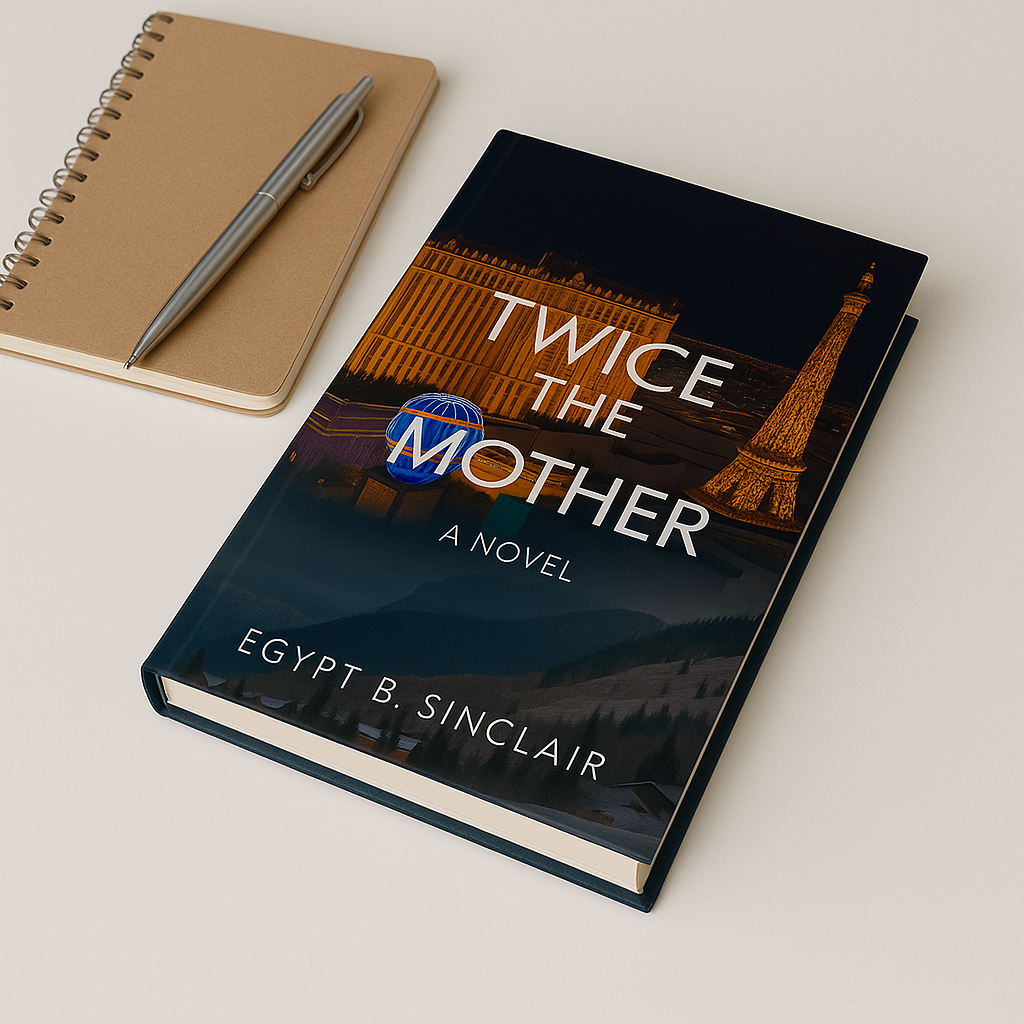
In Twice the Mother, Savannah breaks that unspoken rule — not out of lust, not out of recklessness, but out of necessity.
And like every woman who’s dared to choose herself, she’s the one left carrying the shame.

The History of Forgiven Men
Think about it.
We’ve all watched powerful men rebuild their reputations after the kind of mistakes that would end a woman’s life as she knows it.
A man cheats, leaves, remarries — the headline says he’s found love again.
A woman does the same, and suddenly she’s a warning label.
The cultural math has never been equal.
When a man walks away, it’s framed as courage. When a woman walks away, it’s framed as cruelty.
And here’s the quiet damage that does: it teaches women to believe that their endurance is proof of worth. That pain handled gracefully earns respect. That suffering well is a form of holiness.
But what if it’s just social conditioning in prettier clothes?
That’s how we get trapped — forgiving men who “needed time to grow,” while punishing ourselves for needing rest.
Applauding their second chances while hiding our own survival behind closed doors.
Savannah’s story forces us to look at that imbalance up close.
Her choices mirror the ones many women have imagined but never acted on.
She steps outside the lines, and suddenly, the same society that excuses men for abandoning children demands that she carry every consequence alone.
And that’s the part that should make us pause — not her mistake, but our reaction to it.
Because maybe the real question isn’t why she did it.
Maybe it’s why we expect her not to.
The Myth of the “Good Mother”
We’ve been told the same story for generations.
A good mother gives everything.
Her time. Her body. Her dreams.
Her sanity, if that’s what it takes.
We’re told that love means self-erasure — that being needed is the highest compliment a woman can earn.
And yet, every study on modern motherhood says the same thing: the standard is impossible.
Research studies have found that motherhood carries a moral expectation far stronger than fatherhood — women are seen as responsible for the emotional temperature of the home, while men are praised for showing up at all.
Another long-term review from the NIH showed how those expectations don’t fade with progress. Instead, they evolve — women are now expected to be both career-driven and ever-present mothers. The “ideal” has expanded, not eased.
And here’s the quiet truth: when you’re told to give everything, there’s nothing left to build with.
You can’t raise children in a world that keeps asking you to disappear.
That’s why Savannah’s story matters.
We don’t often say this out loud, but the cultural script of the good mother is the most effective form of control there is.
It keeps women overworked and under-acknowledged.
It keeps silence dressed up as virtue.
And it convinces us that the smallest act of self-preservation is selfishness.
But it’s not selfish to want to be whole.
It’s not betrayal to want a life beyond service.
It’s not failure to choose yourself before there’s nothing left to give.
Because maybe being a good mother starts with being a good woman — to yourself.